
Why Certain Indian Sages Reject Cloths As Part Of Renunciation
Ancient philosophy, be it Indian or Greek, generally regarded pleasures as hindrance to the attainment of Moksha or Liberation.
Ancient philosophy, be it Indian or Greek, generally regarded pleasures as hindrance to the attainment of Moksha or Liberation.

To Read Third Part of this Article, click Here. In the previous article, I explained how the Upanishads reduce PluralityContinue Reading

Read First Part of this Article Here. How did the Upanishad Rishis solved the ‘Problem of One and Many? IContinue Reading
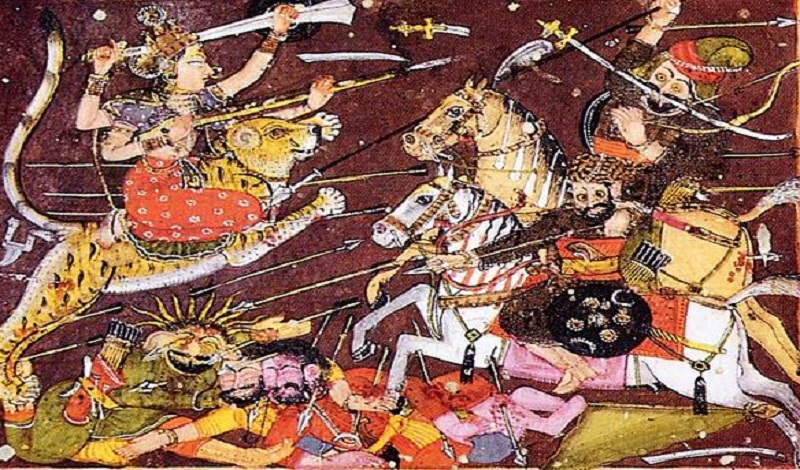
In social media debates (most of them are low rate discussions), it is often argued that Asuras, mentioned in IndianContinue Reading
The Upanishads are those parts of Vedic literature that contains philosophical teaching. It is usually called as Vedanta (end part of Vedas). There are many Upanishads and they are composed not by a single sage, but by many. Also the beginning to the completion of Upanishads composition may span a wide period; say 500 – 1000 years, minimum. Commonly eleven Upanishads are considered as the ‘Principle Upanishads’. Yet, this is not a hard rule. It is generally held so because Sri Sankaracharya wrote commentaries for these eleven Upanishads. They are Isa, Kena, Katha, Taittiriya, Aitareya, Mundaka, Mandukya, Prasna, Chandogya…
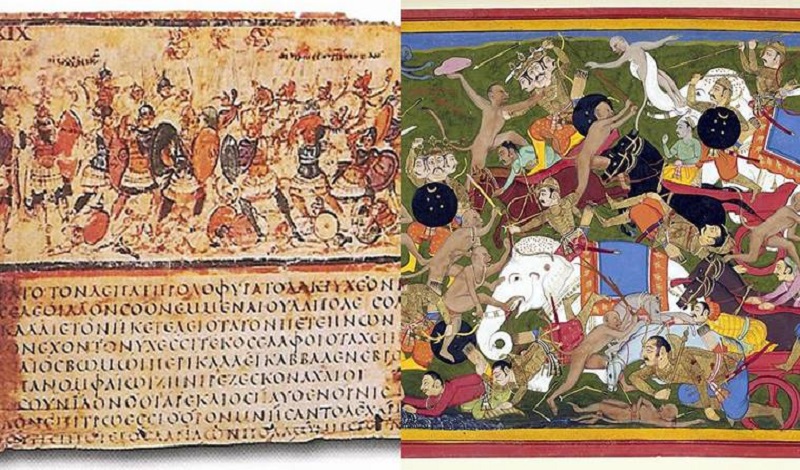
From the very dawn of the comparative studies in the philosophy area, scholars have noted close parallelism between Indian andContinue Reading

 Indian Philosophy